Public disputes between a sponsor and the independent Data Safety Monitoring Board (DSMB) overseeing its trial are rare, but they are not new, and they tend to happen for the same underlying reason: a compressed timeline and intense outside scrutiny expose weaknesses in communication and process that a slower, quieter trial would never surface. When that happens, the instinct is to look for who made a mistake. The more useful question is what about the process made a mistake likely in the first place.
It Is Rarely the People
The clinicians, statisticians, and administrators who staff DSMBs and sponsor teams overwhelmingly approach the work with high scientific and ethical standards. When oversight breaks down under pressure, it is usually because the systems around good people were never built for the load they are now carrying, not because those people stopped doing their jobs well.
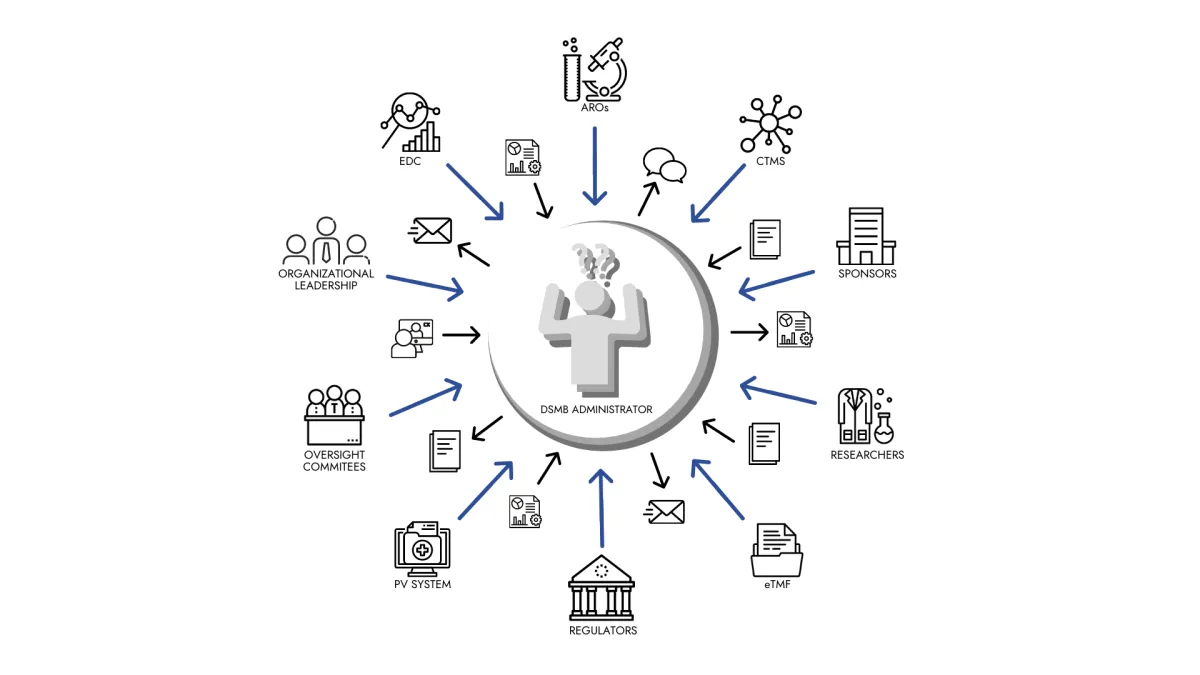
Most DSMBs still coordinate through a patchwork of email, shared drives, and personal notes: tools that work adequately when a trial has months between meetings and nothing urgent happening between them. That patchwork does not hold up when timelines compress. Without a single, integrated place to see the status of oversight work, it becomes genuinely difficult to know what has been reviewed, what is still pending, and whether the committee’s process was actually followed, let alone to demonstrate it after the fact.
The failure mode is rarely a single dramatic error. It is usually smaller and more cumulative: a version of a safety summary that circulated by email after a newer one was already finalized, a vote recorded in one person’s notes but not reflected in the minutes, a question raised informally that never made it into the official record. Any one of these is a minor inconsistency. Under scrutiny, a pattern of them looks like a process that cannot account for itself, whether or not the underlying clinical judgment was sound.
The Cost Shows Up as an Interpretation Gap
Fragmented documentation does not just make oversight harder to run. It makes oversight harder to explain afterward. When a reviewer, a sponsor, or a regulator asks how and when a decision was reached, a fragmented record forces someone to reconstruct the answer from memory and whatever documents happen to still be findable. That reconstruction is where trust erodes fastest, not because the original decision was necessarily wrong, but because the committee cannot show, quickly and confidently, that it was reached the way its charter says it should have been.
Standard Operating Procedures Are Necessary but Not Sufficient
Every DSMB operates under a charter and a set of standard operating procedures (SOPs), typically detailed and well-considered. The gap is rarely in writing the SOPs. It is in implementing, tracking, and reporting on them consistently once a trial is under real pressure. An SOP that exists on paper but is carried out through whatever channel is convenient that week is not really standardized. It only looks standardized until something goes wrong.
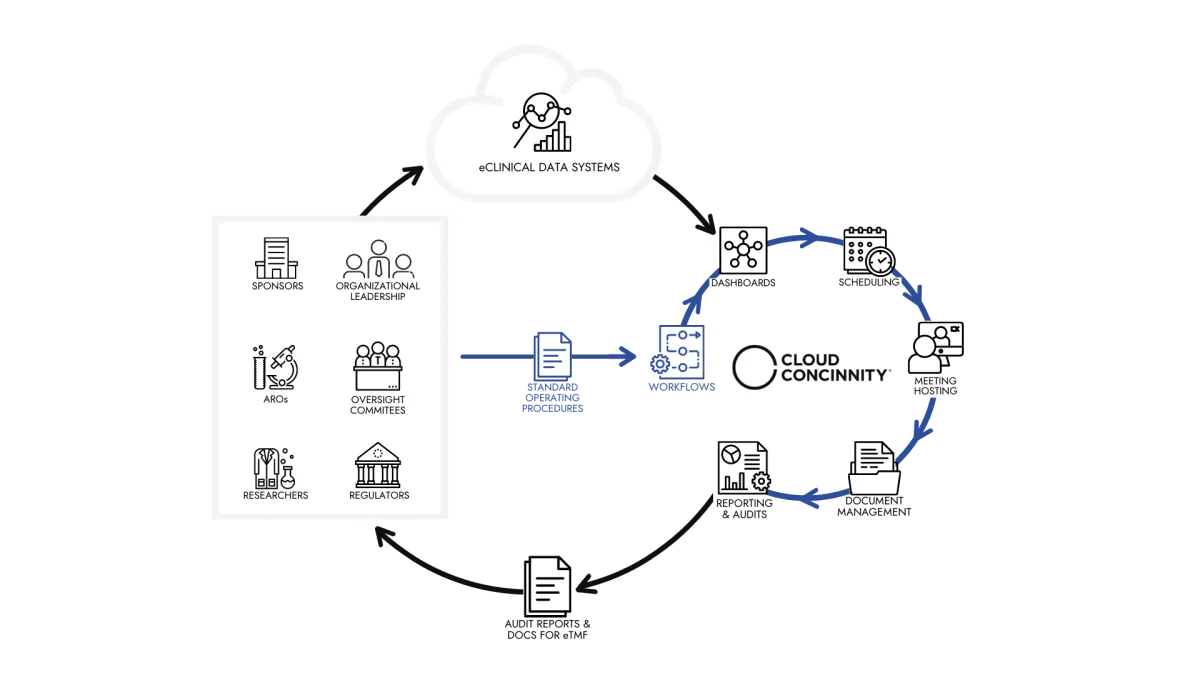
Closing that gap does not require reinventing oversight. It requires a way to turn an SOP into something that is actually executed the same way every time:
- SOPs broken into discrete tasks, so the procedure is a series of concrete steps rather than a paragraph someone has to interpret.
- Tasks assigned to specific roles, so responsibility for each step is unambiguous.
- Execution tracked as it happens, so the committee’s administrator can see status without asking.
- Every action logged, so the record of who did what, and when, exists automatically rather than being assembled later.
- Status available on demand, so a question about where a review stands has an immediate, evidence-backed answer.
Pressure Reveals the Process You Actually Had
The lesson from any high-profile oversight dispute is not really about the specific trial involved. It is that a compressed timeline and heightened scrutiny will find every gap in a committee’s process that a routine trial never would have exposed. Fragmented communication, undocumented decisions, and SOPs that exist in name only are risks on every trial; they are simply easier to ignore until the moment they are not.
A governed execution environment gives independent oversight committees a single place to run that process: standardized tasks, clear ownership, and a documented audit trail that exists because the work happened there, not because someone reconstructed it afterward. That does not change the clinical judgment a DSMB exercises. It removes the operational fragility that turns ordinary pressure into a visible failure.
The trials most likely to face this kind of scrutiny are, by definition, the ones where getting the process right matters most. Building standardized, traceable oversight before that pressure arrives, rather than while a sponsor is already answering hard questions in public, is the difference between a process that holds and one that does not.
Standardizing Ahead of Need
The practical challenge is that most committees only discover where their process is fragile once something has already gone wrong with it, at which point the fix arrives too late to help with the trial that exposed the gap. Standardizing oversight work ahead of need, rather than in response to a specific failure, means the committee’s process is already documented, already tracked, and already producing a defensible record the first time real pressure arrives, not sometime after. That is a modest ask compared to what it protects: the credibility of the one function in a trial whose entire job is to be independently trustworthy under exactly the conditions that make trustworthiness hardest to demonstrate.